 WhatsApp:


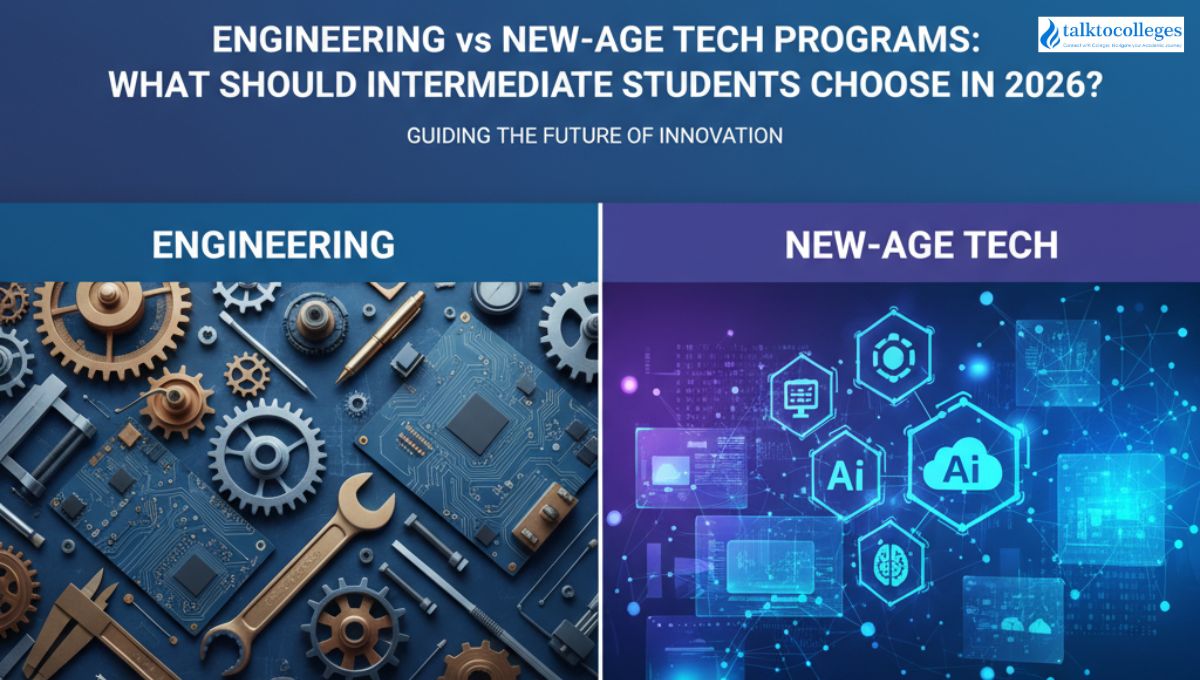
Choosing
the right career after Intermediate is one of the biggest turning points in a
student’s life. With technology advancing at an unprecedented pace, the debate
between traditional engineering programs and new-age tech courses
is stronger than ever. In 2026, the career landscape looks very different from
what it was even five years ago. Students today want programs that offer strong
job prospects, high salary potential, global opportunities, and long-term
relevance.
At TalkToColleges, we help students make informed career decisions by offering expert
guidance, real-time industry insights, and personalized recommendations. In
this blog, we break down the differences between Engineering and New-Age
Tech Programs to help you decide what’s best for your future.
Understanding Traditional Engineering Programs
Engineering
has always been one of the most preferred courses in India. It is structured,
well-established, and continues to offer career stability. Traditional
engineering branches include:
- Computer
Science Engineering (CSE)
- Electronics
and Communication Engineering (ECE)
- Mechanical
Engineering
- Civil
Engineering
- Electrical
Engineering
- Chemical
Engineering
Why Engineering Still Matters in 2026
Despite the
rise of new-age tech programs, engineering remains a solid choice for students
who want deep technical knowledge and a strong foundation in scientific
principles.
Key Advantages of Engineering
1. Strong Career Stability
Engineering
degrees have stood the test of time. Industries such as construction, energy,
manufacturing, automotive, robotics, and infrastructure development still
depend heavily on engineers.
2. Global Recognition
B. Tech
degree is internationally recognized, allowing students to pursue higher education
and jobs abroad.
3. Research & Innovation Opportunities
Engineering
students have access to research labs, internships, and major national-level
projects, which can lead to opportunities in R&D, AI, robotics, and space
technology.
4. Competitive Salary Packages
Branches
like CSE, ECE, and Mechanical Engineering continue to offer high-paying jobs,
especially in tech, manufacturing, and IT companies.
What Are New-Age Tech Programs?
New-age
tech courses are designed to meet the requirements of modern industries. These
programs are more skill-driven and
focused on emerging technologies. Popular new-age tech programs include:
- Artificial
Intelligence & Machine Learning
- Data Science
& Big Data Analytics
- Cybersecurity
& Ethical Hacking
- Cloud
Computing & DevOps
- Blockchain
Technology
- AR/VR
(Augmented & Virtual Reality)
- UI/UX Design
- Full Stack
Development
- Digital
Marketing and Growth Hacking
- Product
Management
Why New-Age Tech Programs Are in Demand
1. Shorter Course Duration
Many of
these programs offer 1–3 years diplomas, certifications, or degree-integrated
models, making them ideal for students who want early entry into the job
market.
2. Skill-Based Learning
These
courses are built on hands-on learning, real-world projects, and industry
tools. Students graduate job-ready.
3. High Salary Potential
Skills like
AI, cloud computing, and cybersecurity are currently among the highest-paying
tech careers worldwide.
4. Future-Proof Career Paths
Automation
and digital transformation are creating massive demand for new-age tech
professionals, making these careers more recession-proof.
Engineering vs New-Age Tech Programs: A Side-by-Side Comparison
|
Factor |
Engineering |
New-Age Tech Programs |
|
Course Duration |
4 years |
6 months
– 3 years |
|
Learning Style |
Theory +
Practical |
Skill-oriented,
project-based |
|
Career Entry |
Medium
(after degree) |
Fast
(after certification/diploma) |
|
Salary Growth |
Steady |
Rapid for
skilled learners |
|
Industry Demand (2026) |
High for
core engineering |
Extremely
high for AI, data, cybersecurity |
|
Global Opportunities |
Strong |
Very
strong, especially in tech hubs |
How Should Students Decide in 2026?
Choosing
between Engineering and New-Age Tech Programs depends on your interest, career
goals, and learning style.
1. Choose Engineering If:
- You love
subjects like Maths & Physics.
- You want a
strong academic foundation.
- You want
long-term stability in fields like manufacturing, IT, electronics, and
civil engineering.
- You plan to
pursue M. Tech, MS, or research.
2. Choose New-Age Tech Programs If:
- You enjoy technology,
coding, or digital tools.
- You prefer
practical projects over theoretical subjects.
- You want a fast-growing
career in tech with high salary potential.
- You want to
enter the job market quickly.
- You are
interested in AI, data, cybersecurity, or cloud careers.
Industry Trends for 2026 and Beyond
1. AI & Machine Learning Will Dominate
AI is
expected to create millions of new jobs globally. Students skilled in ML, NLP,
and computer vision will be in high demand.
2. Cybersecurity Careers Will Explode
With
cyber-attacks rising, companies will aggressively hire security analysts,
ethical hackers, and SOC specialists.
3. Cloud Computing as the New Normal
AWS, Google
Cloud, and Azure skills will become essential for IT and non-IT companies.
4. Data Science Will Remain a High-Paying Career
Data
analysts and data scientists will continue to receive some of the highest
salary packages.
5. Core Engineering Will Transform
Mechanical,
civil, and electrical engineering will integrate automation, AI, IoT and
robotics, creating hybrid career paths.
Conclusion: What’s the Best Choice for Students in 2026?
Both
Engineering and New-Age Tech Programs come with strong career
opportunities—but the right choice depends on your interests, learning style,
and future goals.
If you want
a structured academic journey with long-term value, Engineering is a
perfect choice.
If you want a fast, skill-driven career in high-demand technologies, New-Age
Tech Programs are ideal.
At TalkToColleges,
we help students explore both options with personalized counseling, career
insights, and college recommendations so they can confidently choose the best
path.
Top 5 FAQs
1. Which is better in 2026: Engineering or New-Age Tech Programs?
Both are
excellent choices. Engineering suits students who prefer academic depth, while
new-age tech programs suit those who want fast-growing, skill-based careers.
2. Do New-Age Tech Programs guarantee jobs?
Yes, many
programs offer job-oriented training. However, success depends on your skill
level, portfolio, and hands-on experience.
3. Is engineering still relevant in the future?
Absolutely!
Industries like manufacturing, electronics, construction, robotics, and
renewable energy need engineers more than ever.
4. Are short-term tech courses better than a B. Tech?
Short-term
courses offer faster entry into jobs, but a B. Tech provides long-term
stability and a stronger academic foundation.
5. How can TalkToColleges help me choose the best course?
We provide
personalized counseling, career assessments, college recommendations, expert guidance, and updated
information on future careers.


No comments yet. Be the first to comment!